

Founder Stories
This Avante Graduate Is Solving Food Insecurity in One of Virginia's Poorest Counties
Rebecca Kilgore came to the Avante Bootcamp to learn. She left with $16,000 and a business she can no longer put off starting.
By Emma Ayala June 2025 Johnson City, TN
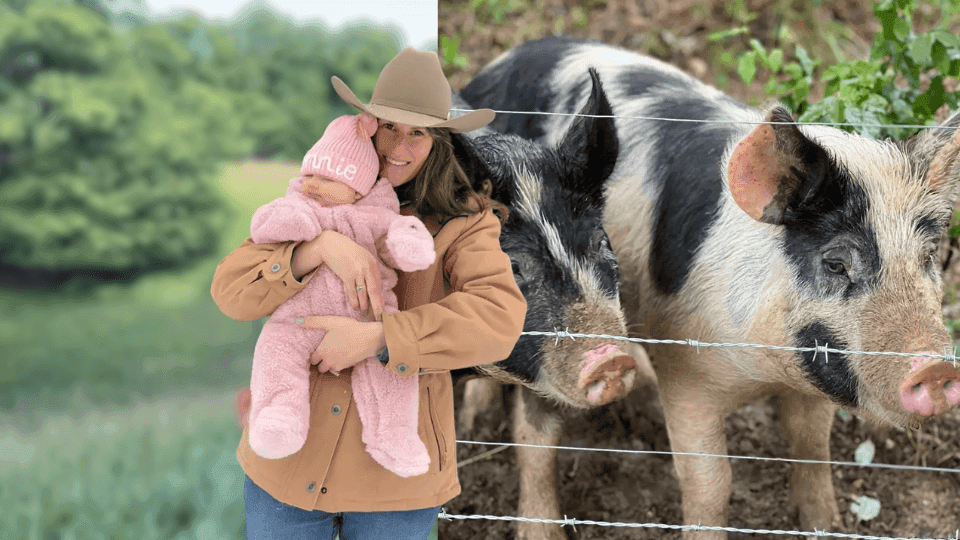
Every time I think about access to real food in rural Appalachia, I think about the math people have to do just to get it. A Saturday farmers market that's an hour and twenty minutes away. A county with one chain grocery store and three dollar stores. A community of working people who want better, but with food access so far away and gas prices what they are, finding quality food is hard and costly.
That gap is real. I've heard it talked about. I've seen it play out. And I've always wondered what it would take for someone to actually solve it, not theorize about it or write a grant about it, but show up with a converted horse trailer and a freezer full of pasture-raised chicken.
Rebecca Kilgore is that person.
A Proposal, a Pasture, and a Turkey Feather
The name Turkey Feather Farm doesn't come from the animals they raise, though they do raise a lot of chickens. It comes from the day Rebecca's husband Jonathan proposed to her in the back pasture of a farmhouse they didn't technically own yet. They'd made an offer, were waiting to hear back, and decided to go for a drive and just look at the place. One thing led to another. They found themselves having a picnic on the front porch, then walking the dirt road out back.
Rebecca was twirling a turkey feather she'd picked up off the ground when Jonathan got down on one knee. He was nervous enough that the words barely came out. But they did, and she said yes, and the farm became theirs a short time later.
"We may have met a few years before that moment, but our true adventure began that day, in that field, in those few words my husband got out because he was so nervous to ask me to marry him."
Rebecca Kilgore, Founder, Turkey Feather Farm
They bought the farm in September of 2023. By the time she sat down in the first session of the Dickenson County Avante Bootcamp cohort, she had chickens, a vision, and a question she hadn't fully answered yet: how do you actually build a business out of this?
The Problem She Was Actually Solving
Rebecca grew up in the suburbs of New Jersey. Her dad was a financial adviser. Her mom worked in HR. But she spent her teenage years sneaking into corn mazes at Alstead Farm, working at a farmstand off Route 206, and eventually moving to her family's 16-acre hobby farm with chickens, goats, and alpacas.
Farming was always in the background. It didn't become a mission until her early twenties, when she started learning about where her food actually came from.
By the time she and Jonathan were settled in Dickenson County, she knew the problem firsthand. The farmers markets 50 miles away were inconsistent. Producers didn't show up regularly. The weekday hours didn't work for working families. The best market in the region required a ninety-minute drive each way. And Dickenson County itself, ranked in the top three poorest counties in Virginia by median household income, was down to one chain grocery store and a handful of dollar stores.
They started growing their own food because they couldn't reliably find what they wanted nearby. Then the question shifted. What if they could make it easier for everyone else?
Dollar Stores Don't Sell Dinner
Dickenson County isn't unique in this. Southwest Virginia as a whole has some of the highest hunger rates in the state. According to the Federation of Virginia Food Banks, Dickenson is among the counties with the worst food insecurity in Virginia — alongside neighboring Buchanan, Lee, and Russell. The numbers behind that aren't abstract. Adults in food-insecure households are two to three times more likely to develop diabetes and more than twice as likely to experience depression and anxiety. On average, they spend over $1,500 more per year on healthcare than food-secure households.
The USDA technically defines a rural food desert as any area where residents live more than ten miles from a grocery store. But that measurement is drawn "as the crow flies." In Appalachia, where winding mountain roads can double or triple actual travel time, researchers at East Tennessee State University have argued that federal data significantly undercounts how many people are actually cut off. The hollers and hillsides of Southwest Virginia don't map neatly onto straight-line distance.
What fills the gap when grocery stores aren't there? Dollar stores. Dollar General in particular has made Central Appalachia a growth target for years, deliberately expanding into low-income rural communities. Across rural Virginia, residents describe the same reality: a Dollar General within reach, a supermarket thirty or forty minutes away. At the dollar store, fresh options are thin. Maybe milk. Maybe eggs. Mostly shelf-stable, heavily processed food at prices that aren't actually that cheap.
A Virginia Cooperative Extension Food Desert Task Force study found that in communities with limited food access across the state, the share of fast food restaurants and convenience stores consistently outweighs the share of stores that carry fresh produce. That's what the landscape looks like on the ground in Dickenson County. That's what Rebecca is driving past every day.
She sees it more personally than a data point, though. She sees it in her community.
"It shows in the litter strewn across front yards and roadsides. It shows in the pile of little snack cakes and soda pop weighing down in their shopping buggies. It will be challenging to break that mindset and show people that what they do and what they eat really does matter on multiple levels."
Rebecca Kilgore, Turkey Feather Farm
That's an observation from someone who loves her community enough to say the hard thing out loud, and then do something about it. Rebecca's goal isn't only to sell better chicken. She wants to change what people think is possible on their own plates.
"By curating a welcoming space where people can learn about the food in the grocery store versus the food off the farm, we can inspire positive life habits."
Rebecca Kilgore, Turkey Feather Farm
Creating a welcoming space like that matters, especially in Appalachia, where people have good reason to be skeptical of outsiders coming in with ideas about how they should live. Rebecca grew up in a suburb. She moved here on purpose. She's a neighbor with a horse trailer and a freezer full of food she raised herself.
A note from the Avante organizers
When we built the Avante Bootcamp, this is exactly the kind of founder we had in mind. Communities like Dickenson County have real problems that deserve real, locally-driven solutions — and the entrepreneurs already living there are the ones best positioned to solve them. She didn't come from outside with a business plan. She came from inside with a turkey feather and a question worth answering. Watching this cohort come together, watching her win, and watching her get to work — this is why we built the program. We couldn't be more proud to see it working.
"You can spend a little more on good food now, or spend it on medical bills later."
Rebecca Kilgore, Turkey Feather Farm
A Market on Wheels for People Who Work
The mobile farmers market idea came from thinking through every obstacle that stood between a working family in Dickenson County and a bag of real food. Drive too far. Market isn't open. Don't know what'll be there this week. Not worth it.
A mobile market removes most of those barriers. It shows up in town, on a consistent day and time, in a place people already are. No hour-and-a-half drive. No guessing what vendors showed up this week. A one-stop setup with meats, eggs, produce, honey, baked goods, herbs, and dried goods — much of it grown at Turkey Feather Farm, the rest sourced from neighboring local producers on consignment.
The unit itself is still being finalized, but Rebecca has a clear vision: a converted horse trailer with a concession window for frozen meats, a table or two outside for everything else. Something that looks like it belongs on a farm. Something people are curious enough to stop for.
"Often you'll see a pickup truck pulled over at a random wide stop with boxes of cabbage or peaches for sale," she told me. "The cabbage and peaches might be the best around. But it's just not the most welcoming looking." She wants people to feel comfortable walking up and asking questions.
What the Avante Cohort Did for Her
Rebecca almost missed the application deadline. She saw the Avante Bootcamp posting on Facebook a few days before the cutoff. She applied, she says, mostly to learn. She didn't expect to do anything with the business until she felt "ready."
The Dickenson County cohort ended up being the largest in Avante's history, which surprised some of the organizers but probably shouldn't have. This is a community, Rebecca told me, full of people who care about where it's going.
The program gave her more than tools. It gave her a framework for thinking about her business differently. Start with the problem, not the solution. Know what you're actually solving before you get excited about what you're selling.
She also found something she didn't expect in her cohort peers. "They were kind of like my customers in a customer review," she said. People at different stages, with different backgrounds, who cared about each other's success. Not competitive. Just honest.
When pitch night came, she was ready. She didn't read from notes. She laid out her problem, her solution, exactly where every dollar of the requested funding would go, down to each piece of equipment. She brought a profit projection she described as "very honest" — small-scale farming doesn't make you rich, but she showed it could be profitable and impactful.
She won first place. Sixteen thousand dollars out of fifty thousand given away total.
"It wasn't until I got home later that night that it sunk in and I was like, 'Oh shucks, I really gotta do this now.'"
Rebecca Kilgore, Turkey Feather Farm
What Rebecca would tell a founder going into their pitch
- Know your problem cold. Don't start with what you're selling. Start with what's broken and why your solution fixes it.
- Be specific about money. Don't say you need capital for "equipment." Name the equipment. Name the price. Judges notice the difference.
- Don't pad your projections. An honest number you can defend is worth more than an exciting number you can't.
- It's okay not to know everything. "That's a great question — can I get back to you?" is a better answer than a confident wrong one.
Building Slow on Purpose
Rebecca is not trying to do everything at once. She still has a full-time job as Director of Parks and Recreation for a local city. Summer is her busiest season, which is also when the farm needs the most attention. She has a six-month-old. She is, as she put it, a wife, a new mom, a daughter, a sister, and an active church member.
She told me about homesteaders burning out in six years. Too much too fast. Overwhelmed, then done. She's watched it happen. Her father's voice is in her head: "There's only one way to eat an elephant, and that's one bite at a time."
So she's building slow. Get the mobile market right before anything else. Show up consistently. Earn the trust. Then, maybe someday, community days at the farm where people can come learn how to process their own chickens, ask questions, share what they know. A place to buy food and a place to belong.
She's already started. Her Turkey Feather Farm Facebook page went up before she had a single product to sell, on the advice of one of the Avante judges. She posts about gardening and cooking and farm life. People are finding her. Connecting. That's the community she's building, and the mobile market is just the physical version of what she's already creating online.
Have an Idea Like Rebecca's?
The Avante Bootcamp is a six-week entrepreneurship program built for founders in rural Appalachia. No equity taken. Real mentorship, real tools, and pitch funding for the ideas that are ready to grow. Applications open in communities across the region.
Learn About Avante →Turkey Feather Farm started in a field that wasn't theirs yet, with a turkey feather in Rebecca's hand and her husband nervous enough to barely get the words out. Now they own the land, they're raising the chickens, and they're converting a horse trailer into something that could quietly change what it means to eat well in Dickenson County.
She came to Avante to learn. She's leaving with $16,000 and no more excuses to wait.
Follow along at @Turkey Feather Farm on Facebook.
Frequently Asked Questions
What is Turkey Feather Farm?
Turkey Feather Farm is a pasture-based farm and mobile farmers market based in Dickenson County, Virginia, founded by Rebecca Kilgore. It focuses on pasture-raised chicken and pork, eggs, produce, and locally sourced goods from neighboring farms, sold through a mobile market unit that brings fresh food directly to rural communities.
What is the Avante Bootcamp and how does it work?
Avante is a six-week entrepreneurship program for founders in rural and underserved communities, particularly across Appalachia. Participants work through business fundamentals, sharpen their ideas with peers and mentors, and compete in a pitch competition for funding. No equity is taken. Learn more at launchavante.com.
What is a mobile farmers market and how is it different from a regular one?
A mobile farmers market travels directly to customers rather than requiring them to come to a fixed location. For rural areas where the nearest quality market might be an hour or more away, this format removes significant barriers — distance, fuel cost, inconvenient hours, and inconsistent vendor attendance. Turkey Feather Farm's unit is designed to set up in consistent locations on consistent days so the community knows exactly when and where to find it.
Is Dickenson County, Virginia a food desert?
Dickenson County is classified as one of Virginia's poorest counties by median household income and has very limited access to fresh, quality food. The county has one chain grocery store, several dollar stores, and a small farmers market with hours that don't work well for most working residents. The nearest high-quality farmers market operates about ninety minutes away. Rebecca Kilgore's mobile market is a direct response to those conditions.
Where can I follow or support Turkey Feather Farm?
You can follow Turkey Feather Farm on Facebook here. Rebecca shares farm updates, gardening and cooking content, and will post when products are available and where the mobile market will be set up. Following and engaging with the page is the best way to support her while the business gets rolling.
How can a rural entrepreneur start a farming business with limited resources?
Programs like Avante are specifically designed for this. They provide business education, mentorship, and seed funding through a competitive pitch process — all at no cost to the founder. Rebecca's approach also offers a useful model: start with a clear, specific problem your community actually has, build your customer base before you have products to sell, and grow slowly enough to avoid burnout. One bite at a time, as her father says.
Ready for another informative article?
Check out this selection below!
Long Live the Underdog: Why Northeast Tennessee Founders Are Built to Win
by Isaac Deel | Nov 5, 2026 | Blog
FoundersForge has always rallied around the idea of the underdog founder—a person who, despite a lack of resources and facing incredible odds, can build amazing things from the ground up.
Read More: Long Live the Underdog: Why Northeast Tennessee Founders Are Built to Win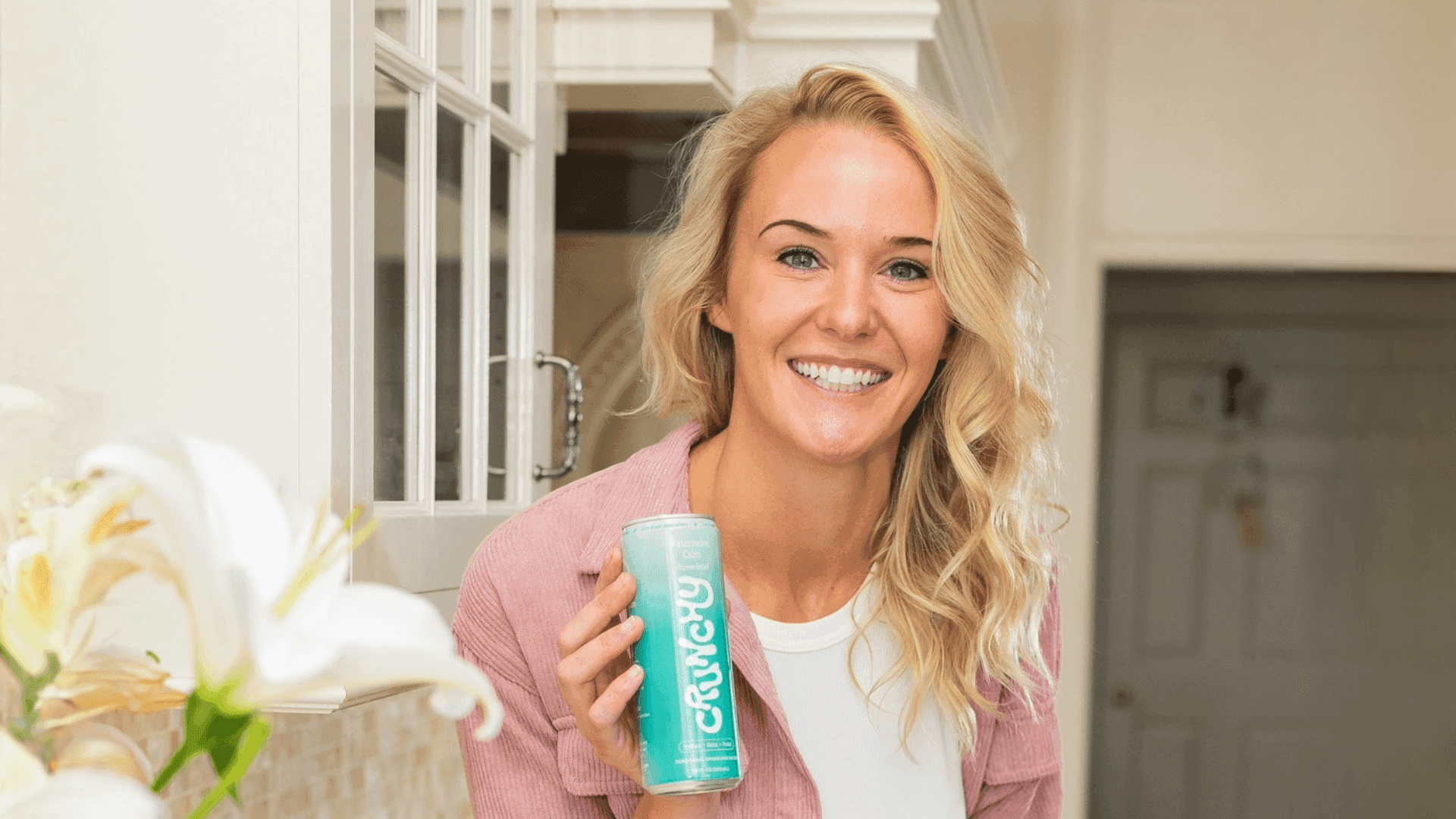

From Church Band Guitar to a Full-Time Music Career
by Emma Ayala | Jul 30, 2026 | Startup Advice
Trevin Sluss quit his day job three years ago with nothing but a guitar, a following, and a plan. Booked 29 times this July, he's running a one-person business, proof that entrepreneurship comes in all different shapes and sizes around here, from grocery stores to singing.
Read More: From Church Band Guitar to a Full-Time Music CareerLong Live the Underdog: Why Northeast Tennessee Founders Are Built to Win
by Isaac Deel | Nov 5, 2026 | Blog
FoundersForge has always rallied around the idea of the underdog founder—a person who, despite a lack of resources and facing incredible odds, can build amazing things from the ground up.
Read More: Long Live the Underdog: Why Northeast Tennessee Founders Are Built to WinFrom Church Band Guitar to a Full-Time Music Career
by Emma Ayala | Jul 30, 2026 | Startup Advice
Trevin Sluss quit his day job three years ago with nothing but a guitar, a following, and a plan. Booked 29 times this July, he's running a one-person business, proof that entrepreneurship comes in all different shapes and sizes around here, from grocery stores to singing.
Read More: From Church Band Guitar to a Full-Time Music Career