


Economic Development Is Broken—Entrepreneurs Are the Fix
by David Nelson | | Startup Advice
The economic development landscape for communities of all sizes is constantly changing, just like the economy itself. Technology continues to evolve, people are more mobile than ever, and a new wave of outsourcing is underway, often referred to as outsourcing 2.0. Of course, AI is also reshaping how work gets done.
Despite all this change, it tends to feel like very little has changed in how small-to-medium sized cities approach economic development.
Does the following situation sound familiar? An economic development group sets out to create new jobs. Manufacturing jobs feel like the obvious target, so resources are pooled to develop a piece of land. It is leveled, utilities are installed, and road access is designed to connect easily to a major highway or interstate. A groundbreaking is held. A ribbon is cut. The site is declared “open for business.”
Then it sits empty.
Grass grows over the flat land. The signage starts to look dated. If the community is lucky, a warehouse or small manufacturer eventually moves in and gets started. More often, the excitement fades and the project quietly slips out of memory.
What happens next? A new plot of land is identified. Another industrial, office, or mixed-use park is announced. The cycle repeats until a community has no fewer than ten empty sites waiting for development.
This is not just anecdotal. Statewide, Virginia invested more than $100 million in industrial sites over the past decade with little to show for it. States with larger incentives and stronger infrastructure often won those deals instead. Kentucky spent $10 million on an industrial park in Bell County that sat idle for 20 years without a single tenant. In Appalachia especially, decades of pouring public dollars into industrial parks has not proven to be a successful strategy for reducing high unemployment. Historian Ronald Eller put it bluntly, continuing to funnel public money into industrial parks is a failed strategy. It is politically appealing and highly visible, but it rarely addresses the deeper challenges facing local economies.
“Insanity is doing the same thing over and over again and expecting the same results.”
So why does economic development repeat this pattern so often?
I finally heard an answer that made sense to me. I was attending an economic development conference, and later that evening, at an after party where the drinks were flowing, I started asking people a simple question:
“If we know most of these developments won’t work, why do we keep doing them?”
One person answered bluntly, and her response stuck with me.
“Economic development is typically a government function. If I try something new and it fails, it’s my fault. My career and livelihood are at risk. If I follow the same old playbook and it fails, then it’s the playbook’s fault, not mine.”
I often forget what non entrepreneurial environments are like, and this was a reminder of how failure is viewed in government, corporate, and large institutional roles. The lesson felt obvious:
When an organization does not allow for acceptable failure, you get insanity.
You can see this in regions filled with empty industrial parks that sit idle for years, waiting for something to happen. I have seen this in places where I grew up, places I have lived, and even where I live now. That said, Johnson City, Tennessee has become far more innovative in its approach to economic development in recent years. More on that shortly.
The ability to try new ideas without fear of career ending consequences is extremely difficult to create inside government. It requires strong communication, long term thinking, and a clear vision for the future. But it is critical for real economic growth in small to medium sized communities. Without innovation, you are left with a “build it and hope they come” strategy. Successful entrepreneurs know this is a strategy to avoid.
Industrial parks themselves are not the enemy. In Washington County, Tennessee, East Tennessee State University’s Innovation Lab has served as an international soft-landing site for foreign businesses entering the region. It has been particularly successful in attracting German owned companies. This was not accidental. It was a targeted, intentional strategy, and it works. Still, even approaches like this are not enough on their own.
So, what should economic developers do instead?
Cultivating Business Is a Better Path Forward
Homegrown entrepreneurship offers a more durable path to economic growth for small and mid-sized cities. Rather than betting everything on landing a single large employer that may build a highly automated facility with relatively few jobs, communities can invest in cultivating their own businesses.
Small businesses truly are the backbone of the economy. Companies with fewer than 500 employees account for 99.9 percent of all U.S. businesses and nearly half of all jobs.
Research from the Atlanta Federal Reserve found that communities with a higher share of employment in small businesses experienced stronger income growth, higher employment growth, and even reductions in poverty. By contrast, regions dependent on a small number of large employers face greater risk when one of them leaves or downsizes. Communities anchored by many small, growing businesses tend to be more resilient and adaptive.
Business Cultivation Does Have Some Challenges
This approach lacks political flash. New businesses fail at high rates, with roughly half closing within five years. That reality is exactly why local governments and development organizations must be intentional about supporting entrepreneurs. Across the country, communities are experimenting with coworking spaces, maker spaces, startup bootcamps, pitch competitions, and hands-on technical assistance to improve the odds of success.
The goal is not just to launch companies. It is to build a pipeline that inspires people to try, helps them start, connects them to the existing business community, and supports them through growth or failure. When done well, this creates a circular startup ecosystem where learning compounds over time and success becomes more common.
This is not theory. There is real data behind it:
Johnson City, Tennessee (population ~75,000)
At FoundersForge, we ran a Startup Bootcamp twice per year. Over five years, this helped launch over 30 new businesses across our region. Several notable successes emerged from this program, including Green Llama. In addition to the bootcamp, we hosted monthly meetups, a speaker series, and an annual pitch competition.
Together, these efforts helped grow the region from roughly 12 high- growth startups in 2016 to well over 100 today. During that same period, we supported more than 278 small businesses through mentorship, coaching, and connections.
Because of these results, we packaged the bootcamp into the Avante Startup Bootcamp, a six-week cohort-based program designed for other economic development organizations to run locally using a proven model. This is now being deployed in 21 communities and is continuing to make an incredible impact.
FoundersForge has also partnered with the local Main Street program to offer graduated rent grants that help new businesses move into downtown storefronts. One of those businesses, The Generalist, has become a local icon and now supports countless makers and artisans by selling locally made goods.
Marion, Virginia (population ~6,000)
This Appalachian town launched the Pop-Up Marion small business bootcamp in 2012 to reactivate its downtown. Participants received training and mentoring, and top teams could earn grants of up to $5,000 to help cover startup costs such as rent. The goal was not short-term pop-ups, but permanent businesses with long term support.
Within two years, downtown vacancy dropped from 17 percent to 6.5 percent. The program helped launch 14 new businesses, along with several expansions of existing ones, and created more than 80 local jobs. Supported by Virginia Main Street and local partners, Marion’s approach became a model replicated by other small towns across the state.
Examples like these are far more common than most people realize. The Main Street program alone provides dozens of case studies showing how targeted investment in small businesses can transform communities.
Now imagine: what if Virginia had invested that $100 million into small business programs instead of industrial parks?
Even accounting for a 50 percent failure rate, the number of businesses launched, jobs created, and lessons learned would represent enormous economic progress, especially when compared to vacant land and empty signs.
Conclusion: Growth Requires Innovation and Cultivation
If small and medium sized cities want to thrive in the next economy, economic development must change. We need a culture that encourages experimentation and accepts failure as part of the process. We need sustained investment in entrepreneurship programs like Avante and local Main Street initiatives. Economic development organizations must partner with Chambers of Commerce, coworking spaces, and entrepreneur support groups to build resilient local economies.
That leaves one final question to consider:
“If we know most industrial parks sit empty, how are we going to invest in entrepreneurship this year?”
Ready for another informative article?
Check out this selection below!


From Church Band Guitar to a Full-Time Music Career
by Emma Ayala | Jul 30, 2026 | Startup Advice
Trevin Sluss quit his day job three years ago with nothing but a guitar, a following, and a plan. Booked 29 times this July, he's running a one-person business, proof that entrepreneurship comes in all different shapes and sizes around here, from grocery stores to singing.
Read More: From Church Band Guitar to a Full-Time Music Career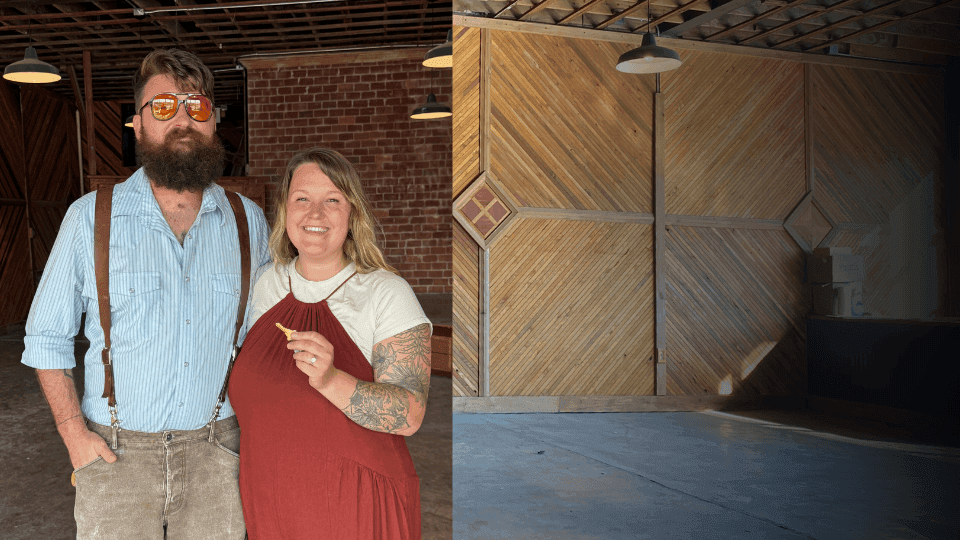
Wants You to Meet Your Farmer
by Emma Ayala | Jul 30, 2026 | Startup Advice
Ariel and Zach White are opening a bulk grocery store on W. Walnut Street, and they want you to walk out knowing whose hands grew what's in your cart, and how to actually use it.
Read More: Wants You to Meet Your FarmerFrom Church Band Guitar to a Full-Time Music Career
by Emma Ayala | Jul 30, 2026 | Startup Advice
Trevin Sluss quit his day job three years ago with nothing but a guitar, a following, and a plan. Booked 29 times this July, he's running a one-person business, proof that entrepreneurship comes in all different shapes and sizes around here, from grocery stores to singing.
Read More: From Church Band Guitar to a Full-Time Music CareerWants You to Meet Your Farmer
by Emma Ayala | Jul 30, 2026 | Startup Advice
Ariel and Zach White are opening a bulk grocery store on W. Walnut Street, and they want you to walk out knowing whose hands grew what's in your cart, and how to actually use it.
Read More: Wants You to Meet Your Farmer